
Embark on a journey into the world of Investment Horizon Strategies for Beginners, where we explore how to make the most of your investments through strategic planning and goal alignment. Dive into this informative guide with a blend of clarity and depth, setting the stage for a compelling exploration of investment opportunities.
In the subsequent paragraphs, we will delve into the nuances of short-term, medium-term, and long-term investment strategies, shedding light on the significance of harmonizing your investment horizon with financial objectives.
Investment Horizon Strategies for Beginners
Investment horizon refers to the length of time an investor plans to hold an investment before selling it. It plays a crucial role in determining the appropriate investment strategy and risk level for an individual’s financial goals.
Short-term Investment Strategies
Short-term investment strategies typically involve holding investments for a period of one year or less. Examples include:
- Buying and selling stocks based on short-term market fluctuations.
- Investing in money market funds for quick access to cash.
- Trading in cryptocurrencies for quick profits.
Medium-term Investment Strategies
Medium-term investment strategies involve holding investments for a period of one to five years. Examples include:
- Investing in bonds or bond funds for steady returns over a few years.
- Purchasing real estate properties for rental income over a few years.
- Investing in index funds for gradual growth over the medium term.
Long-term Investment Strategies
Long-term investment strategies involve holding investments for more than five years. Examples include:
- Investing in a diversified portfolio of stocks for long-term growth.
- Contributing regularly to a retirement account for future financial security.
- Investing in a college savings plan for a child’s education expenses in the distant future.
Aligning your investment horizon with your financial goals is crucial for achieving long-term success. For example, if you have a short-term financial goal such as buying a car in a year, it would be unwise to invest in high-risk stocks that may experience significant fluctuations in that timeframe. On the other hand, if you are saving for retirement, a long-term investment horizon allows you to ride out market ups and downs for potentially higher returns over time.
Investment Advice
When it comes to investing, seeking advice from a professional can make a significant difference in your success. An investment advisor can provide valuable insights, guidance, and expertise to help you navigate the complex world of investments.
Tips for Selecting an Investment Advisor
Choosing the right investment advisor is crucial for your financial well-being. Here are some tips to help you select the best advisor for your needs:
- Research and compare different advisors: Look into the background, experience, and track record of potential advisors to ensure they have the expertise you need.
- Check credentials and certifications: Make sure the advisor is properly qualified and licensed to provide investment advice.
- Consider their investment philosophy: Align your investment goals and risk tolerance with the advisor’s approach to ensure compatibility.
- Ask about fees: Understand how the advisor charges for their services and ensure it fits within your budget.
- Seek referrals and recommendations: Talk to friends, family, or colleagues for referrals to reputable advisors they have worked with.
Role of an Investment Advisor in Developing Investment Strategies
An investment advisor plays a crucial role in helping you develop a personalized investment strategy tailored to your financial goals and risk tolerance. They analyze market trends, assess your financial situation, and recommend suitable investment options to optimize your portfolio.
Importance of Seeking Professional Investment Advice for Beginners
For beginners, the world of investing can be overwhelming and risky without proper guidance. Seeking professional investment advice can help you avoid costly mistakes, diversify your portfolio effectively, and achieve long-term financial stability.
Investment Banking
Investment banking plays a crucial role in the financial market by providing various financial services to individuals, corporations, and governments. These services are essential for raising capital, facilitating mergers and acquisitions, and managing investments.
Services Offered by Investment Banks
Investment banks offer a wide range of services, including underwriting securities, providing financial advisory services, facilitating mergers and acquisitions, and managing assets. They help companies raise capital through the issuance of stocks and bonds, assist in strategic decision-making related to corporate finance, and provide expertise in complex financial transactions.
- Underwriting Securities: Investment banks help companies issue stocks and bonds by purchasing them from the issuer and reselling them to investors.
- Financial Advisory Services: Investment banks provide advice on mergers, acquisitions, and other financial transactions to help companies make informed decisions.
- Mergers and Acquisitions: Investment banks facilitate mergers and acquisitions by advising on the valuation of companies, negotiating deals, and structuring transactions.
- Asset Management: Investment banks manage assets on behalf of individuals, corporations, and institutional investors to help them achieve their financial goals.
Investment Banking and Investment Horizon Strategies
Investment banking plays a crucial role in shaping investment horizon strategies by providing access to capital markets, facilitating diversification of investment portfolios, and offering financial expertise. By leveraging the services of investment banks, individuals and corporations can make informed investment decisions that align with their investment horizon goals.
Investment Opportunities
As a beginner in the world of investing, it is crucial to understand the different types of investment opportunities available to you. Each opportunity comes with its own set of risks and rewards, so it’s essential to evaluate them carefully based on your investment horizon.
Stock Market
- Investing in individual stocks allows you to own a portion of a company.
- Stocks can provide high returns but come with high volatility and risk.
- Research the company’s financials, market trends, and future growth potential before investing.
Bonds
- Bonds are debt securities issued by governments or corporations.
- Bonds offer fixed interest payments and return of principal at maturity.
- Consider the credit rating of the issuer and interest rate environment when investing in bonds.
Mutual Funds
- Mutual funds pool money from multiple investors to invest in a diversified portfolio of stocks, bonds, or other securities.
- Mutual funds offer professional management and diversification but come with management fees.
- Choose mutual funds based on your investment goals and risk tolerance.
Real Estate
- Investing in real estate involves buying properties for rental income or capital appreciation.
- Real estate can provide a steady income stream and potential for long-term growth.
- Consider factors like location, property condition, and market trends when investing in real estate.
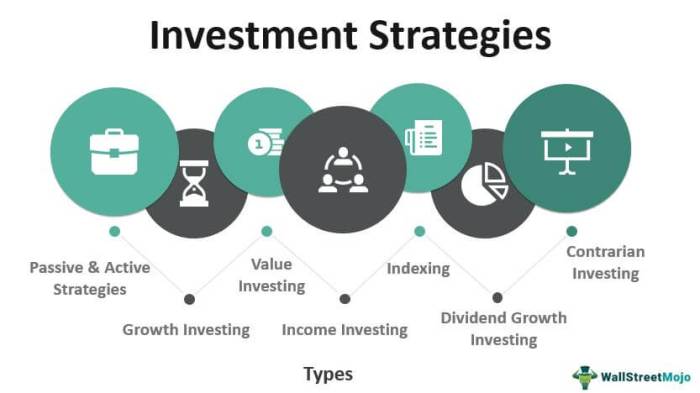
Investment Strategy
Having a well-defined investment strategy is crucial for achieving financial goals and managing risk effectively. It provides a roadmap for making investment decisions based on your objectives, risk tolerance, and time horizon.
Key Components of an Investment Strategy
- Determine your financial goals: Define clear and achievable objectives for your investments, whether it’s saving for retirement, buying a house, or funding your child’s education.
- Assess your risk tolerance: Understand how much risk you are willing to take with your investments and choose asset classes accordingly.
- Allocate your assets: Diversify your investments across different asset classes like stocks, bonds, and real estate to minimize risk and maximize returns.
- Consider your time horizon: Invest based on how soon you need the money and adjust your portfolio’s risk level accordingly.
- Monitor and rebalance: Regularly review your investments to ensure they align with your goals and make adjustments when necessary to stay on track.
Importance of Regularly Reviewing and Adjusting Investment Strategies
Market conditions, economic factors, and personal circumstances can change over time, affecting the performance of your investments. By regularly reviewing and adjusting your investment strategy, you can ensure that it remains aligned with your goals and risk tolerance. This proactive approach can help you capitalize on opportunities, mitigate risks, and stay on track to achieve financial success.
In conclusion, Investment Horizon Strategies for Beginners equips you with the tools to navigate the complex world of investments with confidence. By understanding the importance of a well-defined investment strategy and aligning it with your financial goals, you can pave the way for a prosperous financial future.
Frequently Asked Questions
What is the significance of aligning investment horizon with financial goals?
Aligning your investment horizon with financial goals ensures that your investment strategy is tailored to meet your specific objectives, whether they are short-term gains or long-term growth.
How can beginners evaluate different types of investment opportunities?
Beginners can evaluate investment opportunities by considering factors such as risk, potential returns, and alignment with their investment horizon. Conducting thorough research and seeking professional advice can also help in making informed decisions.


