
Embark on a journey with Fee-Only Investment Advisors, where financial expertise meets your investment goals, paving the way for a prosperous future.
Delve deeper into the realm of investment strategies, advice, and opportunities tailored to your financial success.
What are Fee-Only Investment Advisors?
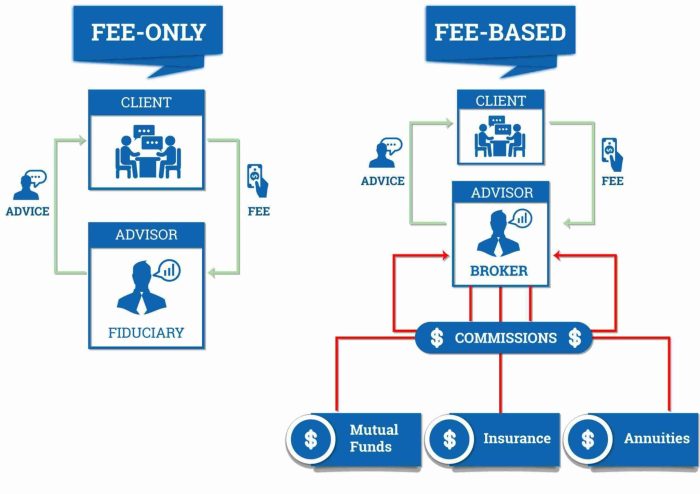
Fee-Only Investment Advisors are financial professionals who provide investment advice and financial planning services for a fee paid directly by the client. They do not earn commissions or incentives from recommending specific financial products, which helps eliminate potential conflicts of interest.
Role and Responsibilities of Fee-Only Investment Advisors
Fee-Only Investment Advisors are tasked with creating personalized investment strategies tailored to their clients’ financial goals and risk tolerance. They conduct in-depth analysis of market trends, economic indicators, and individual investment options to provide sound advice and recommendations.
- Developing comprehensive financial plans
- Executing investment transactions
- Monitoring portfolio performance
- Providing ongoing financial guidance
Benefits of working with Fee-Only Investment Advisors
Working with Fee-Only Investment Advisors offers several advantages:
- Objective advice: Fee-Only advisors prioritize your best interests without being influenced by commissions or sales quotas.
- Transparent fee structure: Clients know exactly what they are paying for and can trust the advice given is unbiased.
- Customized financial planning: Advisors tailor strategies to individual needs, considering factors like risk tolerance, time horizon, and financial goals.
Differentiation from commission-based advisors
Fee-Only advisors differ from commission-based advisors in how they are compensated:
Fee-Only advisors charge a flat fee, hourly rate, or a percentage of assets under management, while commission-based advisors earn money through the sale of financial products, receiving a commission for each transaction.
Investment Advice
Seeking professional investment advice is crucial for individuals looking to grow their wealth, secure their financial future, and achieve their long-term goals. Professional advisors can provide valuable insights, expertise, and guidance that can help investors make informed decisions and navigate the complexities of the financial markets.
Types of Investment Advice
- Asset Allocation: Advisors help clients determine the optimal mix of investments based on their risk tolerance, time horizon, and financial goals.
- Portfolio Management: Advisors assist in selecting and managing investments to build a diversified portfolio that aligns with the client’s objectives.
- Retirement Planning: Advisors create strategies to help clients save and invest for retirement, ensuring a comfortable and secure future.
- Estate Planning: Advisors help clients develop plans to protect their assets and ensure a smooth transfer of wealth to heirs.
Successful Investment Advice Stories
“One success story involves a young professional who followed her advisor’s recommendation to start contributing to a retirement account early in her career. Over time, her investments grew significantly, providing her with a strong financial foundation for the future.”
“Another example is a couple who worked with an advisor to create a diversified investment portfolio. Despite market fluctuations, their portfolio remained resilient, allowing them to achieve their financial goals and retire comfortably.”
Investment Advisor
An investment advisor is a professional who provides financial guidance and investment advice to individuals or entities. They help clients make informed decisions about their investment portfolios based on their financial goals, risk tolerance, and time horizon.
Qualifications and Certifications
To become an investment advisor, individuals typically need to hold a bachelor’s degree in finance, economics, or a related field. In addition, they must pass the Series 65 exam, also known as the Uniform Investment Adviser Law Examination, which qualifies them to provide investment advice for a fee.
Ethical Considerations and Regulations
Investment advisors are held to a fiduciary standard, which means they are required to act in the best interest of their clients at all times. They must disclose any conflicts of interest and provide transparent information about fees and compensation. Furthermore, investment advisors are regulated by the Securities and Exchange Commission (SEC) or state securities regulators to ensure compliance with laws and regulations governing the financial industry.
Investment Banking
Investment banking plays a crucial role in the financial industry by providing various financial services to corporations, governments, and other entities. Unlike investment advisors who primarily focus on providing investment advice to individual clients, investment bankers work with larger entities to facilitate complex financial transactions, such as mergers and acquisitions, underwriting securities, and raising capital.
Differentiation between Investment Advisors and Investment Bankers
- Investment Advisors: Provide personalized investment advice to individual clients based on their financial goals and risk tolerance.
- Investment Bankers: Assist corporations and other entities in raising capital, mergers and acquisitions, and other financial transactions.
Role of Investment Banking
Investment banking plays a critical role in facilitating the functioning of financial markets by providing essential services such as underwriting, trading, and advisory services. Investment banks also help companies raise capital through issuing stocks and bonds, as well as advising on strategic financial decisions.
Examples of Successful Investment Banking Strategies
- Initial Public Offerings (IPOs): Investment banks assist companies in going public by underwriting their IPOs and helping them navigate the complexities of the process.
- Mergers and Acquisitions (M&A): Investment banks play a key role in facilitating M&A transactions by providing advisory services, conducting due diligence, and negotiating deals on behalf of their clients.
- Debt Financing: Investment banks help companies raise debt capital through issuing bonds or securing loans, providing valuable financial expertise in structuring these transactions.
Investment Horizon
Investment horizon refers to the length of time an investor is willing to hold an investment before needing the funds. It is a crucial aspect of financial planning as it helps determine the appropriate investment strategy based on the investor’s goals, risk tolerance, and time frame.
Significance of Investment Horizon
The investment horizon plays a vital role in financial planning as it influences the selection of investment vehicles and the level of risk that can be taken. A longer investment horizon allows for more aggressive investment strategies, such as investing in growth stocks or volatile assets, while a shorter horizon may require more conservative approaches to protect capital.
Consideration by Investment Advisors
Investment advisors take into account their clients’ investment horizons when creating customized strategies. By understanding the time frame within which the investor aims to achieve their financial goals, advisors can recommend suitable investment options that align with their objectives. For example, younger investors with a longer horizon may be advised to focus on growth-oriented investments, while retirees with a shorter horizon may opt for more income-focused strategies.
Examples of Investment Horizons
- Long-term Investment Horizon: Retirement planning, education funds for young children, buying a home in the distant future.
- Short-term Investment Horizon: Saving for a vacation, emergency fund, upcoming large purchase.
Investment Opportunities
Investment opportunities are avenues through which individuals can potentially grow their wealth by allocating funds into various assets. Identifying and capitalizing on these opportunities is crucial for maximizing returns and achieving financial goals.
Types of Investment Opportunities
- Stocks: Investing in shares of publicly traded companies can offer significant returns if chosen wisely.
- Real Estate: Purchasing properties for rental income or capital appreciation can be a lucrative investment option.
- Bonds: Fixed-income securities issued by governments or corporations provide a steady stream of income.
- Mutual Funds: Pooling funds with other investors to invest in a diversified portfolio managed by professionals.
Identifying Lucrative Investment Opportunities
- Market Research: Keeping abreast of market trends, economic indicators, and industry developments can help in spotting potential opportunities.
- Risk Assessment: Understanding the risk-return profile of each investment can aid in selecting the right opportunities.
- Financial Goals: Aligning investment opportunities with long-term financial objectives ensures a strategic approach to wealth creation.
Investment Strategy
Investment strategy refers to a set of rules, behaviors, and procedures that guide an investor’s selection of an investment portfolio. It plays a crucial role in achieving financial goals and managing risk effectively.
Types of Investment Strategies
- Diversification: This strategy involves spreading investments across different asset classes to reduce risk. Fee-Only Investment Advisors often recommend diversification to minimize the impact of market fluctuations.
- Value Investing: Some advisors follow a value investing strategy, focusing on buying undervalued securities with the potential for long-term growth.
- Income Investing: Advisors may also implement an income investing strategy, prioritizing investments that generate regular income through dividends or interest payments.
Case Studies of Successful Investment Strategies
One successful investment strategy involved a mix of diversified index funds, bonds, and individual stocks, tailored to a client’s risk tolerance and financial goals.
Another case study showcased the benefits of a value investing approach, where an advisor identified undervalued companies with strong fundamentals, resulting in significant returns over time.
In conclusion, Fee-Only Investment Advisors offer a beacon of financial wisdom, steering you towards a secure and thriving investment portfolio. Trust in their guidance for a brighter financial tomorrow.
Helpful Answers
What sets Fee-Only Investment Advisors apart from commission-based advisors?
Fee-Only Investment Advisors solely rely on client fees for compensation, eliminating potential conflicts of interest often seen with commission-based advisors.
What qualifications are needed to become an Investment Advisor?
To become an Investment Advisor, one typically needs a bachelor’s degree, relevant work experience, and certifications such as the CFA or CFP.
How do Investment Advisors identify lucrative opportunities for clients?
Investment Advisors conduct thorough research, analyze market trends, and assess risk factors to pinpoint profitable investment opportunities for their clients.


