
Embark on a journey through the dynamic landscape of changing investment horizons over time, exploring how this evolution impacts strategies, opportunities, advisory services, and the role of banking in the financial realm.
Delve into the intricacies of adapting to varying timeframes and discover the key factors driving transformation in the investment world.
Investment Horizon Evolution
Investment horizons have evolved significantly over time, influenced by various factors and technological advancements that have shaped the way investors approach their investments.
Long-Term vs. Short-Term Perspective
The traditional view of investment horizons used to be more focused on the long-term, with investors holding onto assets for extended periods to realize substantial gains. However, in recent years, there has been a shift towards a more short-term perspective, with the rise of day trading and algorithmic trading strategies. This shift has been driven by a combination of factors such as increased market volatility, access to real-time market information, and the desire for quick returns.
Globalization and Market Integration
Globalization has also played a significant role in changing investment horizons, as investors now have access to a wide range of investment opportunities across the globe. This has led to a more diversified portfolio approach, with investors spreading their investments across different markets and asset classes to mitigate risk and maximize returns.
Technological Advancements
Technological advancements have had a profound impact on shaping investment horizons. The advent of online trading platforms, robo-advisors, and mobile apps has made it easier for investors to buy and sell securities quickly, leading to a more active trading approach. Moreover, the use of big data analytics and machine learning algorithms has enabled investors to make more informed investment decisions based on real-time market data and trends.
Impact of Economic Events
Economic events such as recessions, interest rate changes, and geopolitical tensions can also influence investment horizons. During times of economic uncertainty, investors may adopt a more cautious approach and shorten their investment horizons to protect their capital. On the other hand, periods of economic growth and stability may encourage investors to take a longer-term view and hold onto their investments for a more extended period.
Investment Strategies Through the Ages
Investment strategies have evolved significantly over time, adapting to changing investment horizons and market conditions. Traditional approaches focused on long-term investments in stable assets, while modern strategies incorporate a mix of asset classes and utilize advanced financial instruments for diversification and risk management.
Traditional Investment Strategies
- Historically, investors relied on buying and holding assets such as stocks, bonds, and real estate for long periods to benefit from capital appreciation and income generation.
- Asset allocation was simpler, with a focus on balancing risk and return through a diversified portfolio of stocks and bonds.
- Strategies were more conservative, with a long-term view and less frequent trading to capitalize on market trends.
Modern Investment Approaches
- Modern strategies incorporate a broader range of asset classes, including alternative investments like hedge funds, private equity, and commodities.
- Active portfolio management and tactical asset allocation are common practices to respond quickly to market changes and opportunities.
- Technological advancements have enabled algorithmic trading, quantitative analysis, and risk modeling to optimize investment decisions and enhance returns.
Risk Management in Investment Strategies
- With changing investment horizons, risk management has become a crucial aspect of modern investment strategies to protect capital and minimize losses.
- Diversification across asset classes, geographies, and industries is key to mitigating risk and ensuring portfolio resilience in volatile markets.
- Tools like stop-loss orders, hedging strategies, and options contracts are used to manage downside risk and limit potential losses in adverse market conditions.
Investment Opportunities in Different Timeframes
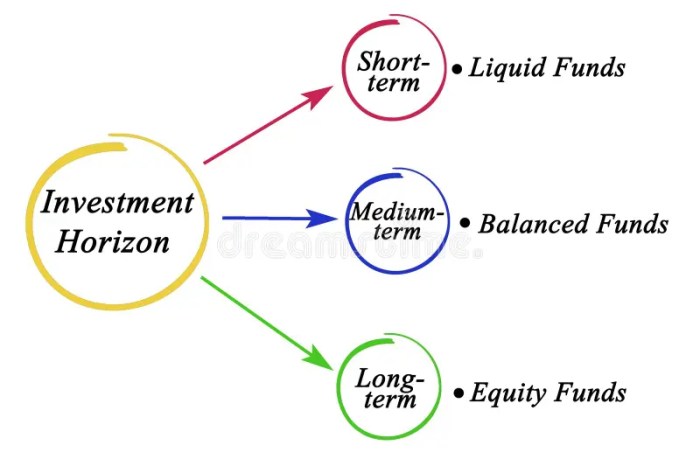
Investing in the financial markets offers various opportunities that can vary significantly based on the time horizon of the investment. Understanding how investment opportunities change across short, medium, and long-term horizons is crucial for developing a successful investment strategy.
Short-Term Investment Opportunities
Short-term investment opportunities typically revolve around assets that are highly liquid and can be easily bought and sold within a short period. These opportunities are often characterized by rapid price movements and are more susceptible to market volatility.
- Day trading in stocks or currencies
- Investing in short-term bonds or money market instruments
- Trading options or futures contracts
Medium-Term Investment Opportunities
Medium-term investment opportunities provide a balance between short-term trading and long-term investing. These opportunities involve assets that offer potential growth over a moderate timeframe without the need for constant monitoring.
- Investing in growth stocks with a medium-term outlook
- Real estate investments for rental income and appreciation
- Peer-to-peer lending for fixed-income opportunities
Long-Term Investment Opportunities
Long-term investment opportunities are focused on building wealth over an extended period, often spanning years or even decades. These opportunities are suitable for investors with a long-term financial goal, such as retirement planning or wealth preservation.
- Investing in index funds or ETFs for broad market exposure
- Building a diversified portfolio of stocks and bonds for long-term growth
- Allocating funds to retirement accounts for tax-advantaged growth
Diversification plays a crucial role in capitalizing on various investment opportunities across different timeframes. By spreading investment capital across a mix of asset classes, industries, and geographies, investors can mitigate risk and enhance returns over the long run. It is essential to align investment strategies with the intended time horizon to maximize the potential benefits of each opportunity.
Advice from Investment Advisors
Investment advisors play a crucial role in helping individuals navigate the complexities of changing investment horizons. Their expertise and guidance can make a significant difference in how investors manage their portfolios over time.When it comes to adjusting investment portfolios based on evolving timeframes, investment advisors offer valuable insights and recommendations. For example, during periods of economic uncertainty, advisors may suggest reallocating assets to safer investments to protect against market volatility.
On the other hand, in times of economic growth, advisors may advise clients to take on more risk for potentially higher returns.
Qualities to Look for in an Investment Advisor
- Experience: Look for advisors with a proven track record of success in navigating changing market conditions.
- Communication Skills: Effective communication is key in understanding and implementing investment strategies.
- Transparency: A good advisor should be transparent about fees, risks, and potential returns associated with different investment options.
- Adaptability: The ability to adapt to changing market trends and adjust strategies accordingly is essential for an investment advisor.
- Client-Centric Approach: Advisors who prioritize the needs and goals of their clients are more likely to provide tailored investment solutions.
Role of Investment Banking
Investment banking plays a crucial role in adapting to changing investment horizons by providing a wide range of financial services to clients, including corporations, governments, and institutional investors. These services are tailored to meet the specific needs of clients operating in different timeframes and with varying investment strategies.
Facilitating Strategic Decision-Making
Investment banks help clients make strategic decisions by offering expert advice and financial solutions that align with their investment goals. This includes assisting clients in raising capital through debt or equity financing, mergers and acquisitions, and other strategic transactions. By understanding the client’s investment horizon and risk tolerance, investment banks can tailor their recommendations to optimize returns and minimize risks.
- Underwriting Services: Investment banks provide underwriting services for issuing securities, such as stocks and bonds, to raise capital for clients. This helps companies access funding to support their growth and expansion initiatives.
- Merger and Acquisition Advisory: Investment banks offer advisory services for mergers, acquisitions, and divestitures, helping clients identify strategic opportunities and navigate complex transactions to create value for their stakeholders.
- Financial Advisory: Investment banks provide financial advisory services to help clients with capital structuring, restructuring, and other financial decisions that impact their long-term strategic objectives.
As we conclude our exploration of changing investment horizons over time, we reflect on the ever-shifting nature of the financial markets and the crucial role of adaptation and foresight in navigating this complex terrain.
Helpful Answers
What factors have influenced the evolution of investment horizons?
The evolution of investment horizons has been influenced by factors such as technological advancements, regulatory changes, and shifting market dynamics.
How do investment advisors assist in adapting to changing horizons?
Investment advisors play a crucial role in helping clients adjust their portfolios, aligning them with evolving timeframes and market conditions for optimal returns.
Why is diversification important in capitalizing on investment opportunities?
Diversification helps mitigate risk and maximize returns by spreading investments across different asset classes and sectors, reducing exposure to any single market fluctuation.


